In the volatile landscape of Silicon Valley, stability is often viewed with a side of suspicion. When a company’s portfolio is essentially a “tale of two cities” — one a declining legacy business and the other a commodity-driven hardware engine — investors tend to keep one finger on the sell button. Yet HP just delivered a Q1 2026 financial report that defies the gravity of its own sector.
Despite a brutal memory shortage that has sent component costs into the stratosphere and a printing market that continues its long, slow sunset, HP is doing more than just surviving; it is pivoting. With a leadership transition in full swing and a budding romance with OpenAI, HP is positioning itself not as a “box maker,” but as the architect of the AI-driven “Future of Work.”
Let’s talk about the state of HP this week, and we’ll close with my Product of the Week: the HP EliteBook X G2, which proves HP is positioning for the future.
Q1 2026: Crushing Estimates in a Commodity Crisis
HP’s Q1 results, released on Feb. 24, provided a masterclass in operational discipline. The company reported net revenue of $14.4 billion, up 6.9% year over year, landing at the top of its guidance. More impressively, non-GAAP diluted earnings per share (EPS) hit $0.81, up 9.5% year over year.
The star of the show was the Personal Systems (PC) division, which saw revenue surge 11% to $10.3 billion. This growth is particularly notable given the memory headwinds that have plagued the industry. A global DRAM and NAND shortage has forced manufacturers to navigate price hikes of over 200% in some categories. HP’s ability to grow in this environment suggests it has leveraged its massive supply chain scale to secure inventory that smaller rivals simply cannot reach.
Conversely, the Printing segment remains the difficult child. Revenue fell 2% to $4.2 billion, with hardware units declining year over year. However, HP’s razor-and-blades model remains a cash cow; printing still maintains a robust margin, effectively funding the company’s R&D for more futuristic endeavors.
The OpenAI Factor: Beyond the ‘AI PC’ Buzzword
For the last year, the tech world has been shouting about AI PCs from every rooftop. But HP is moving beyond just sticking a neural processing unit (NPU) into a laptop. The company has been aggressively exploring deeper integrations with OpenAI and other LLM providers to create a proprietary software layer that makes local AI useful.
The strategy is clear: if you can’t outrun the decline of traditional hardware, turn the hardware into a high-margin service portal. By partnering with OpenAI, HP is looking to offer “HP-tuned” versions of models that run locally on its new EliteBook X G2 series. These machines are designed to handle 85 trillion operations per second (TOPS), allowing users to analyze sensitive corporate data without it ever leaving the device — a massive selling point for enterprise security.
This relationship isn’t just about software; it’s about survival. As memory costs rise, HP needs to justify higher average selling prices (ASPs). A “smart” PC that acts as a localized, private version of ChatGPT is far easier to sell at $1,500 than a standard laptop at $800.
Robotics Imperative and Mobile Convergence
While AI provides a current lift, HP’s long-term health requires a move into a high-growth adjacent industry. Two paths sit open: robotics and the PC-smartphone merger.
1. Robotics and Automation: HP already has a foothold in industrial 3D printing. However, it needs to move from being a supplier to a platform owner. Entering the robots-as-a-service (RaaS) market for warehouse logistics or health care would utilize HP’s existing global service and support network — one of its underappreciated assets.
2. Smartphone Convergence: The line between a smartphone and a PC is blurring into a single “compute device.” With the rise of foldable displays and cloud-streamed desktops, the traditional “clamshell” form is starting to look archaic. HP’s expertise in thermal management puts it in a prime position to develop the “pro-sumer” mobile workstation — a device that docks into a monitor for full OS power but lives in your pocket.
Lores Leaves HP House in Order
On Feb. 3, HP announced that Enrique Lores was stepping down after a 36-year career at the company, including seven as CEO. It is rare to see a CEO exit during a period of such strength, but Lores is leaving HP in remarkably better shape than he found it.
Under Lores, HP navigated the post-pandemic “PC hangover,” streamlined its printing business into a subscription-heavy model (HP+), and successfully launched the Future of Work initiative. He didn’t just manage the contraction; he engineered a soft landing and a new takeoff. The board has appointed Bruce Broussard (formerly of Humana) as interim CEO, but the search for a permanent leader is where the real drama begins.
Who Should Lead HP Next?

AI-generated image
The next HP CEO must be more than a hardware veteran; they must be a “platform” thinker. Here are three candidates the Search Committee should consider:
Panos Panay – SVP, Amazon Devices & Services: The former “father of Surface” at Microsoft (now at Amazon), Panay knows how to marry hardware and software with a level of cool and premium design that HP’s consumer line desperately needs.
Anneliese Olson – President of Imaging, Printing & Solutions at HP: If the board wants continuity and a leader who understands the high-margin “printing” engine that funds everything else, Olson is the clear internal favorite.
Pat Gelsinger – Former CEO at Intel: Recently “retired” from Intel, Gelsinger is perhaps the most technically gifted executive on the market. While his tenure at Intel was a mixed bag due to manufacturing delays, his vision for “Siliconomics” and the AI PC aligns perfectly with HP’s current roadmap. He could provide the technical gravity HP needs to transition from a box maker to an AI architecture firm.
Wrapping Up
HP is currently the “little engine that could” of the legacy tech world. By outperforming Q1 2026 expectations amid a memory crisis and a fading print market, it has proven that its “Future Ready” strategy is more than fluff.
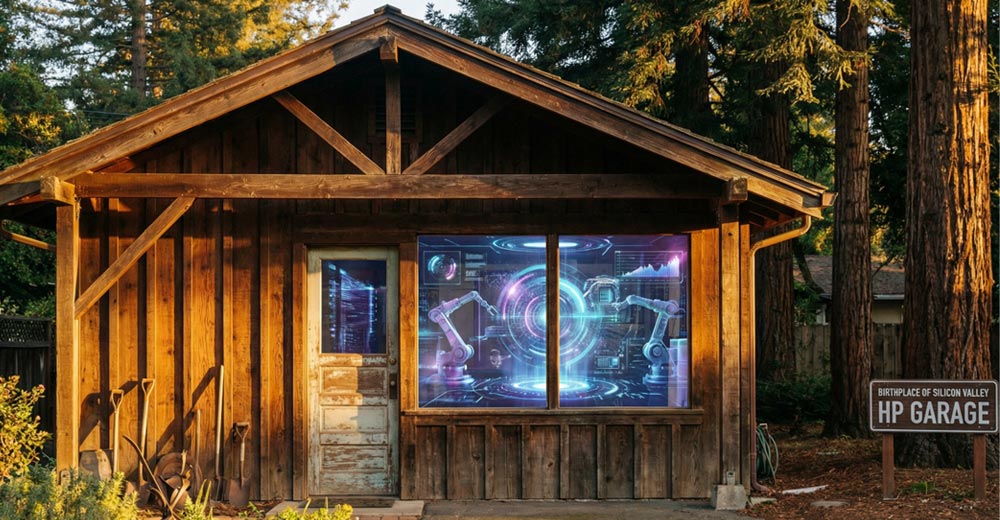
However, the window for this pivot is narrow. The new CEO will need to double down on the OpenAI partnership and perhaps make a big bet on robotics or mobile convergence to ensure that HP remains relevant for another 80 years. For now, the “Garage in Palo Alto” is still very much open for business.

The HP EliteBook X G2 Series
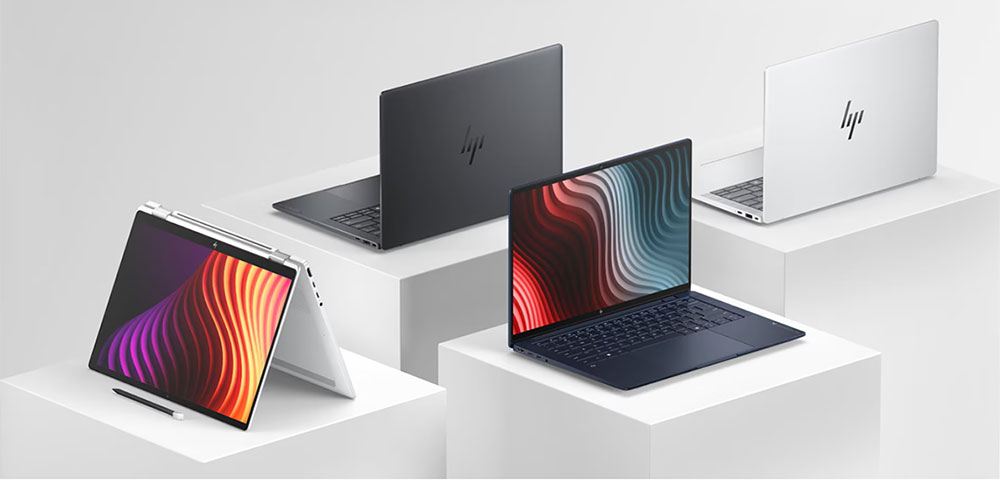
Image Credit: HP
The HP EliteBook X G2 represents a fundamental shift in HP’s approach to the enterprise. By utilizing a single premium chassis that supports Intel Core Ultra Series 3, AMD Ryzen AI 400, and Snapdragon X2 Elite processors, HP effectively decouples its brand identity from any single silicon provider.
As showcased in this hands-on overview, the EliteBook X G2 design maintains a premium, rigid feel despite its remarkably low weight.
Availability and Pricing Strategy
HP is prioritizing the Intel-based configurations first, with the EliteBook X G2i and the convertible EliteBook X Flip G2i becoming available in February. For organizations leaning into the specialized AI performance of the 60-80 TOPS NPU, the EliteBook X G2q (Qualcomm) and the EliteBook X G2a (AMD) are slated for a spring 2026 release.
While HP is holding official pricing close to its vest until launch, early industry listings and analyst projections place the entry point for these ultra-premium configurations in the low $1,000s, with fully loaded 3K Tandem OLED and 64GB RAM models potentially climbing beyond $2,000. This pricing tier underscores HP’s intention to position the G2 as a premium leadership tool rather than a budget fleet device — a future-ready investment for the AI-enabled executive.
How the EliteBook X G2 Delivers the AI Pivot
Performance Leadership – The 80 TOPS Milestone: The Qualcomm-powered G2q variant is the “hero” device, delivering a world-first 80 TOPS NPU. This massive local overhead enables concurrent AI workloads — such as running local LLMs and real-time security scanning simultaneously — without the latency or privacy risks of the cloud.
Agentic AI Readiness: As I’ve highlighted, the future belongs to “agents” that act on the user’s behalf. This laptop’s local processing power is designed to support persistent, proactive AI assistants that require high NPU throughput to remain responsive in real-time.
Modular Innovation: HP has introduced a top-mount keyboard design that reportedly reduces replacement time by 80%. This focuses on minimizing downtime for a distributed, hybrid workforce where IT can no longer rely on a central office repair desk.
Hardware-Enforced Security: HP is extending its lead in security with hardware-enforced, quantum-resistant protection via the HP Endpoint Security Controller (ESC). This helps ensure the device is future-proofed against emerging AI-driven cyberthreats.
Quick Comparison: The AI Engine Choice
|
Model |
Processor Engine |
Max AI Performance |
Target Audience |
|
EliteBook X G2q |
Snapdragon X2 Elite |
80 TOPS NPU |
Local AI Power Users |
|
EliteBook X G2a |
AMD Ryzen AI 400 |
60 TOPS NPU |
Multi-threaded Pros |
|
EliteBook X G2i |
Intel Core Ultra Series 3 |
50 TOPS NPU |
Graphics-Heavy AI Apps |
The G2 series proves HP is no longer just selling “boxes.” It is selling an AI ecosystem where the hardware’s primary job is to provide the local “gasoline” (TOPS) for the sophisticated “engine” (AI agents and HP Smart Sense).
By making the laptop under 1 kg while maintaining this level of power, HP addresses the mobility-vs-performance trade-off that has plagued business laptops for a decade. That, above all, makes this laptop my Product of the Week.